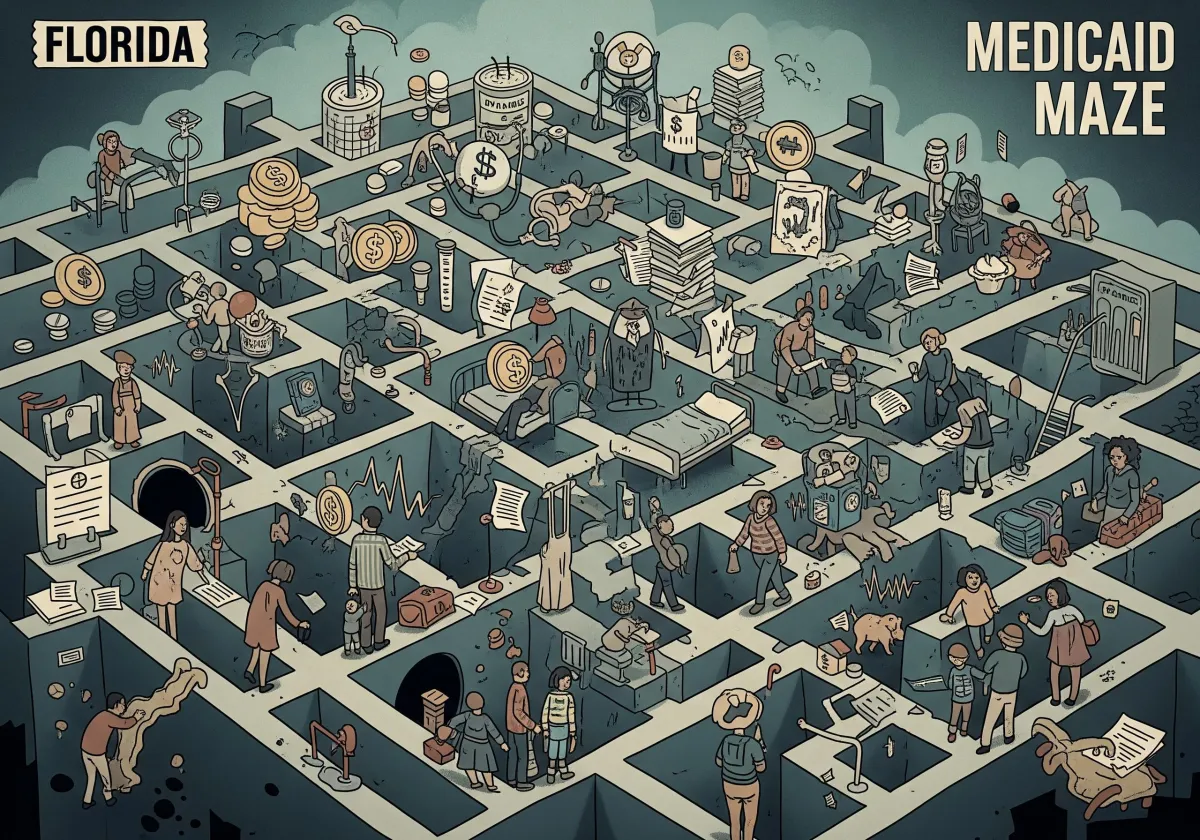
The Medicaid Maze:
The Medicaid Maze: Why IDD Families Are Fighting for Their Lives
Picture this: You're a parent of an adult with intellectual and developmental disabilities, and your child lands their first job. Instead of celebration, you're paralyzed with fear. Why? Because that $800 monthly paycheck could strip away the $50,000 worth of Medicaid services keeping your loved one alive and thriving in the community. This isn't a hypothetical nightmare—it's the cruel reality facing thousands of IDD families across Florida right now.

The Impossible Numbers Game
As someone who's spent years navigating this system alongside families, I've witnessed firsthand how our current Medicaid structure creates impossible choices. The numbers are staggering, and the rules are designed to trap families in poverty:
• Monthly income limit: $2,901 maximum for a single person with IDD • Asset limit: Cannot own more than $2,000 total • The cruel catch: HCBS waivers aren't guaranteed—they're subject to waiting lists • The punishment: Meet every requirement and still find yourself without services
The system literally punishes success while offering no safety net. Families can follow every rule perfectly and still lose everything.

The Managed Care Storm on the Horizon
The landscape is shifting beneath our feet with Florida's aggressive push toward managed care through the expanded IDD Pilot Program. While legislators promise faster service delivery, I'm watching advocacy groups like Disability Rights Florida sound the alarm about meaningful input from people with disabilities being overlooked in this transition.
This isn't just bureaucratic shuffling—it's a fundamental change that could either revolutionize care or create devastating new barriers depending on how it's implemented. The emphasis on cost-saving measures over individualized needs has me deeply concerned about what families will face.
Your Action Plan: Fight Back Now
Here's what families and professionals need to act on immediately:
• Champion the "Medicaid Buy-in" option - This would finally allow individuals with disabilities to pursue employment without sacrificing life-sustaining services
• Demand transparent oversight during the managed care transition—specifically requiring that cost-saving measures never override person-centered care decisions
• Refuse to be excluded from policy discussions—the people living with these systems daily are the only ones who truly understand what works and what fails catastrophically
• Stay informed and ready - Policy changes happen fast, and families need advocates who see them coming
The managed care transition is happening whether we're ready or not. But we can still influence whether it strengthens or devastates our community. Don't let critical policy changes blindside your families—[Join our IDD Policy Alert Network and get immediate notifications when legislation threatens your clients' services, plus insider strategies from front-line advocates who've successfully fought these battles before.] Because when Medicaid rules change overnight, you need to know before your families lose everything.


